A hidden treasure..
As the owner of Mainwood Guitars and as a collector and player of vintage National Guitars and acoustic blues music, every now and then I find interesting things like rare National instruments, prewar 78rpm records, but also little things in the vintage guitar cases from the 1920’s and 1930’s. A vintage Elton capo from the early thirties just like the one Blind Boy Fuller used, old string packages, photos, personal notes etc. Worth a lot of money? No, but for me as a historian in this category very valuable and in many cases just as, and sometimes even more important than the instrument itself. On moments like that I can’t help it and I’m just like a kid on Christmas morning.. However, sometimes I do find things thats something extra spacial, just like the moment I’ve found the only color image of the mysterious 1920’s Triolian Tricone. This was the guitar that gave the Triolian her name. After that, of course the Triolian became one of National’s most famous and best selling single cone guitars instead of the expensive Tricones. Definitely not a cheap instrument but with a price tag of $45,- it was doable if you compare it with the price of the high-end instruments like the German silver Tricones.
In a nutshell, the cheapest Tricone version was the Style 1 (plain body) with a price of $125,- which wasn't what you could call “affordable”. For those more wealthy musicians there was the option for the engraved luxury models like the Style 2 (Wild Rose $145,-), Style 3 (Lily Of The Valley $165,-) and the top of the line flagship, the Style 4 with the beautiful Chrysanthemum engraving by Mr Williams ($195,-..).
The style 4 is what this story is all about. Not just a regular Style 4, but an important piece of history!

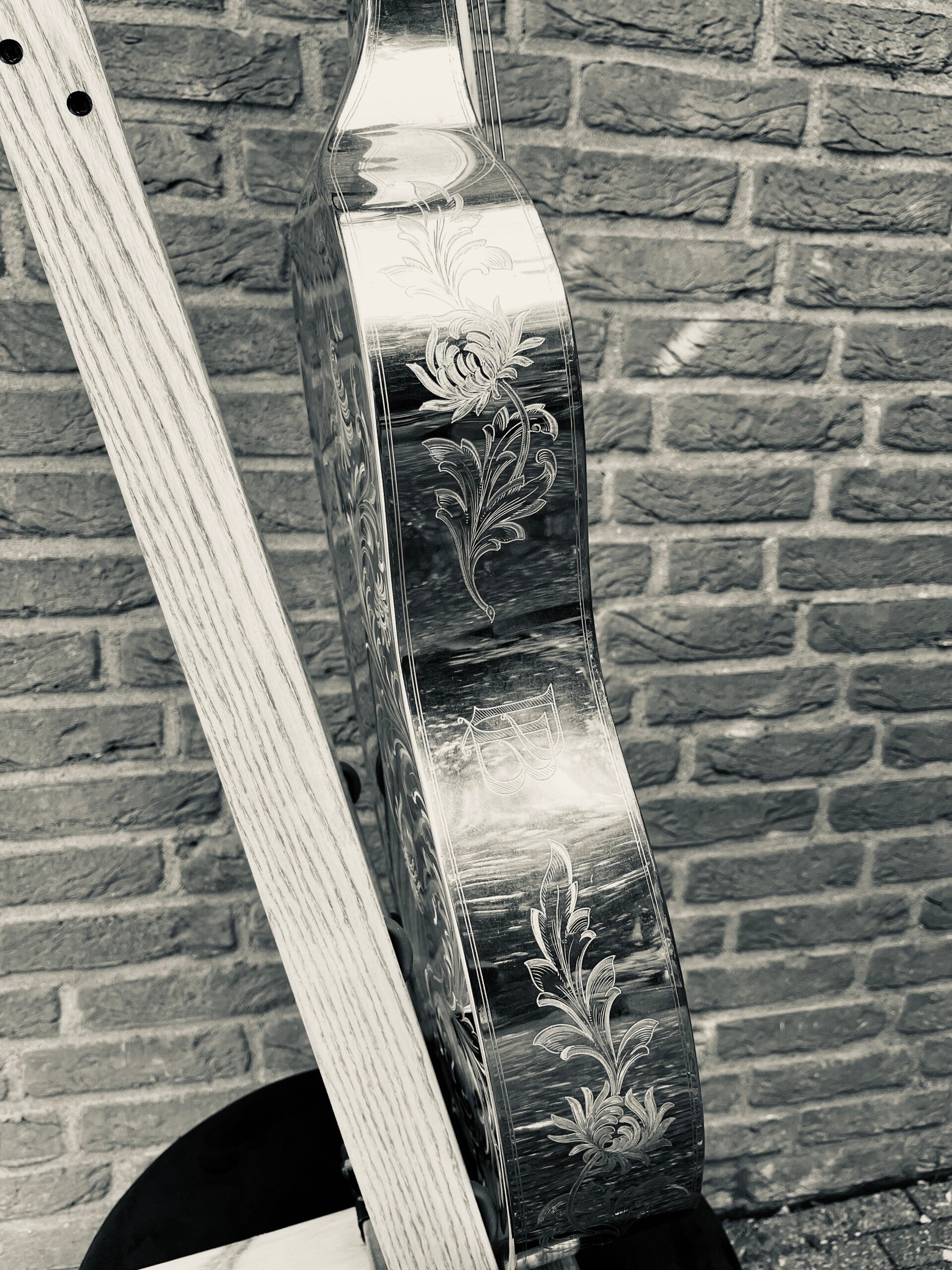
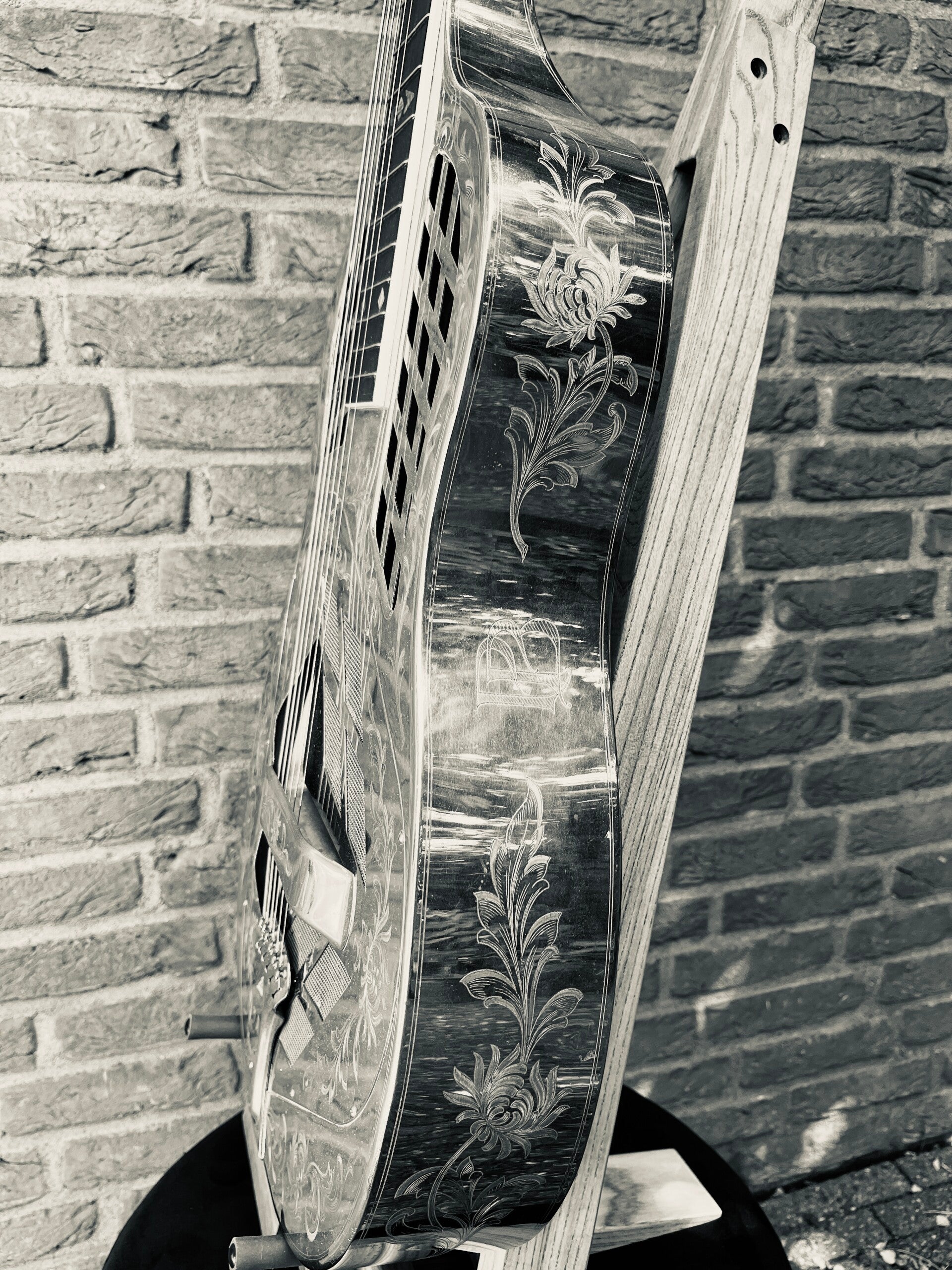
The "PB" Tricone
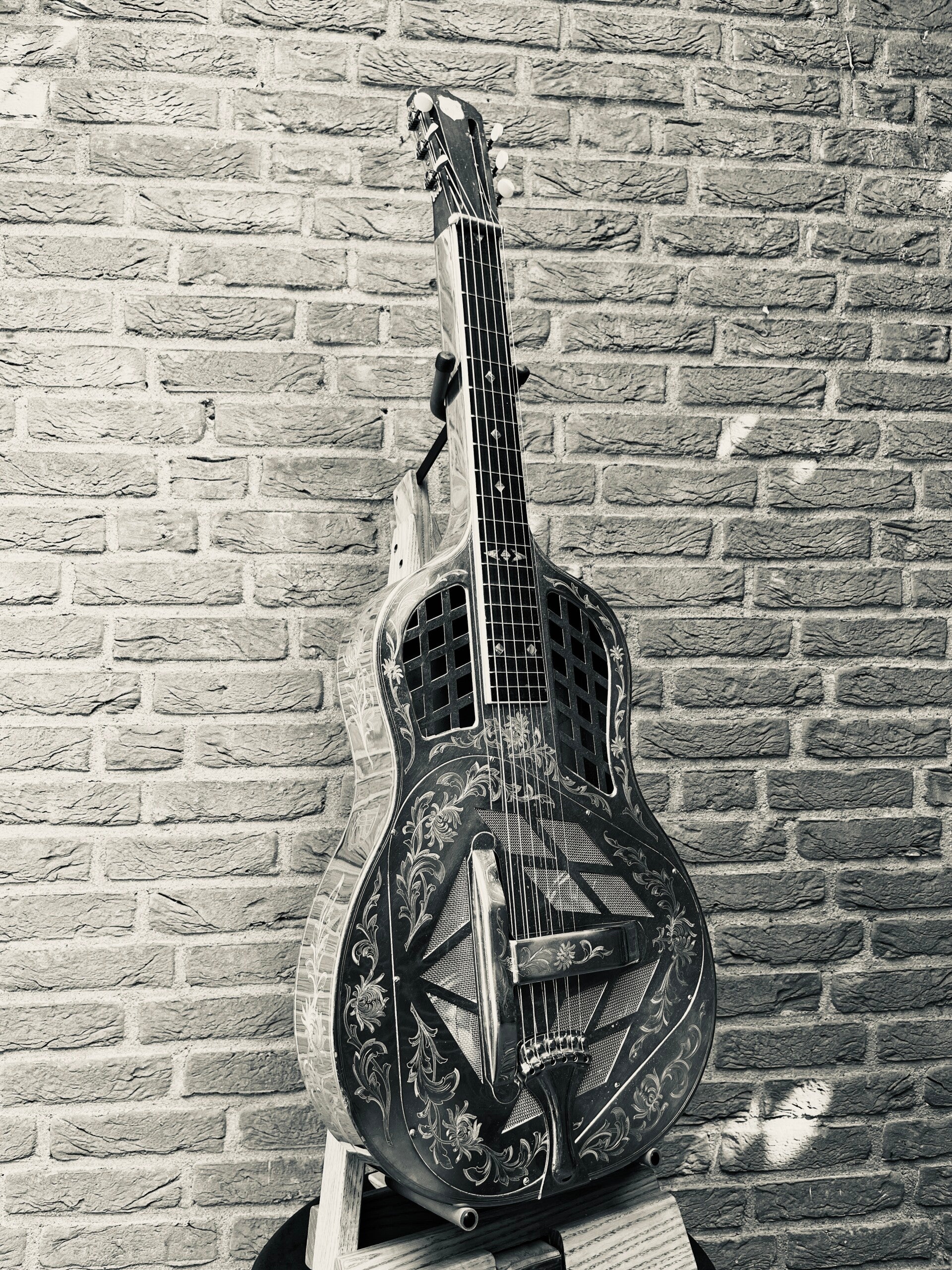
Not long ago we acquired another selection of vintage Nationals that were put aside for decades. All beautiful pieces but one caught my eye and after some study it was clear that this particular instrument is something special..
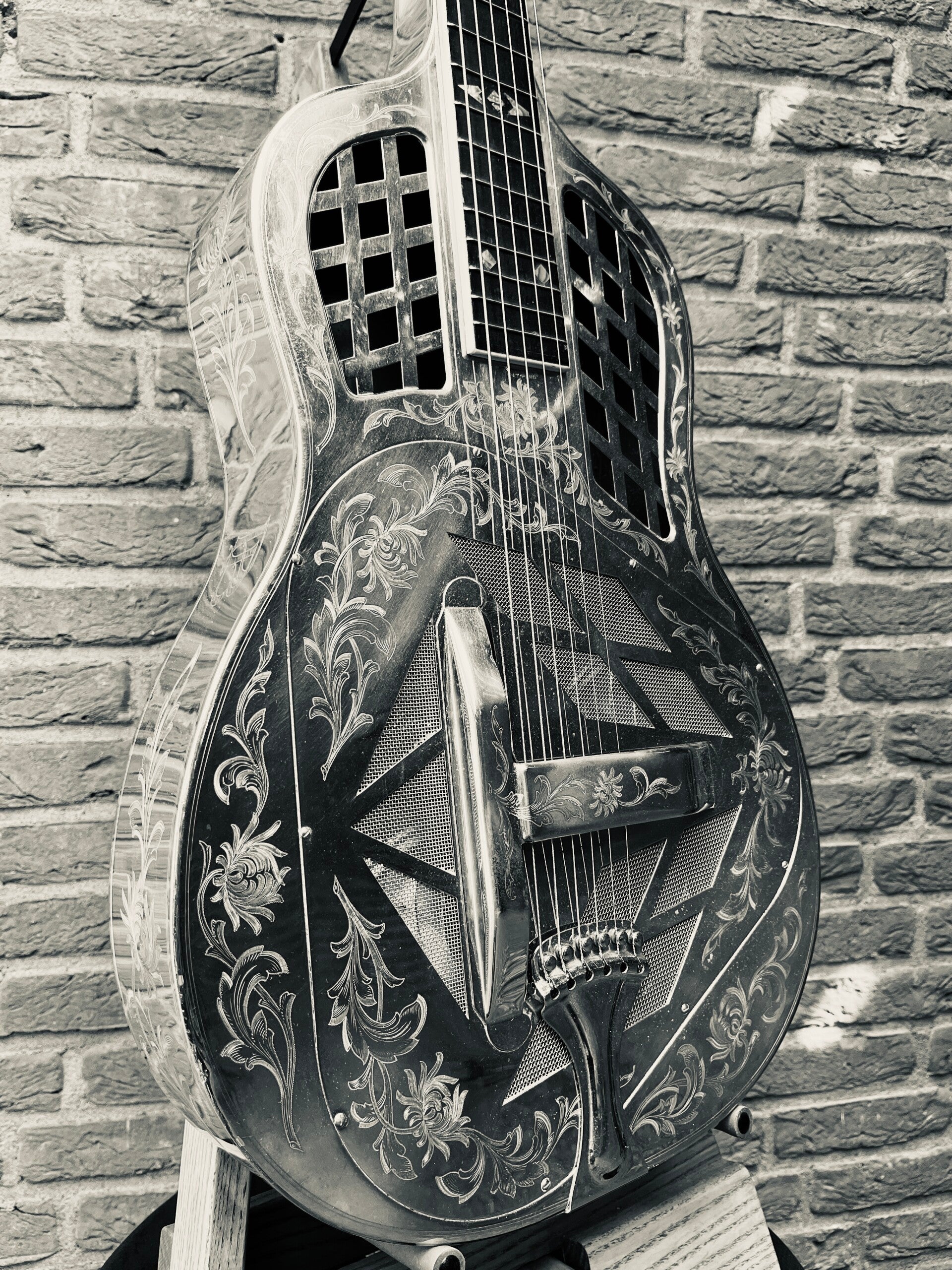
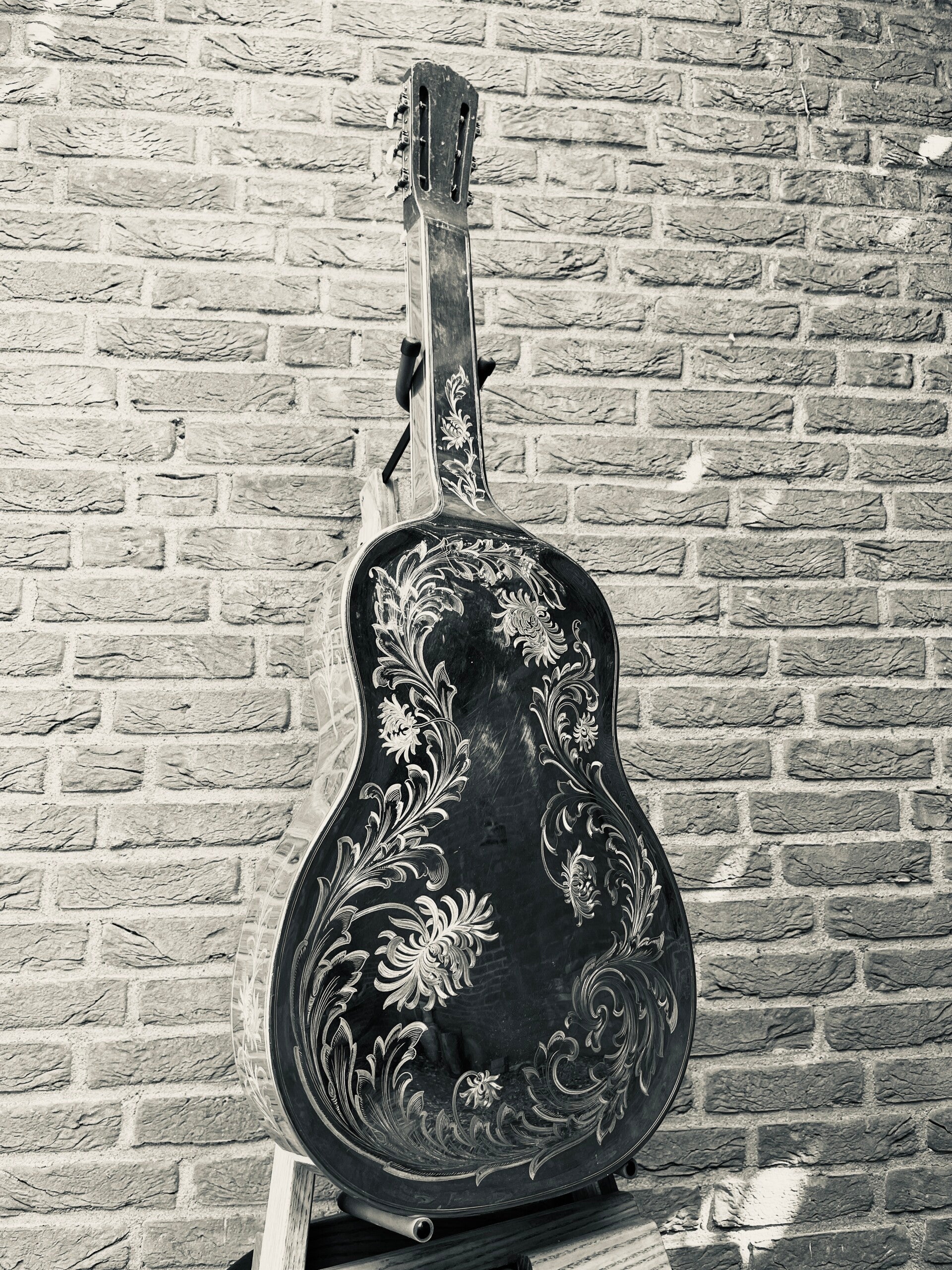
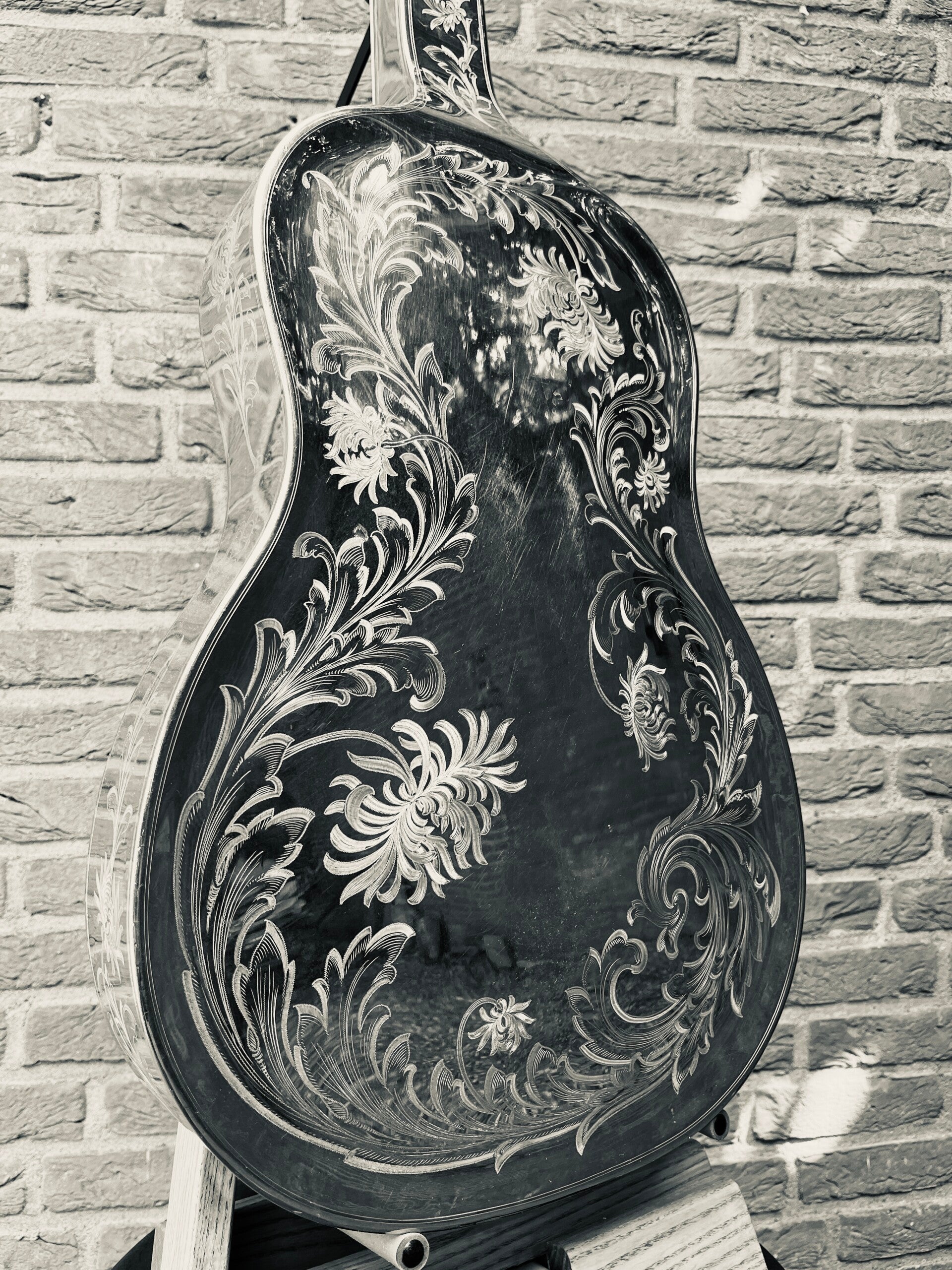
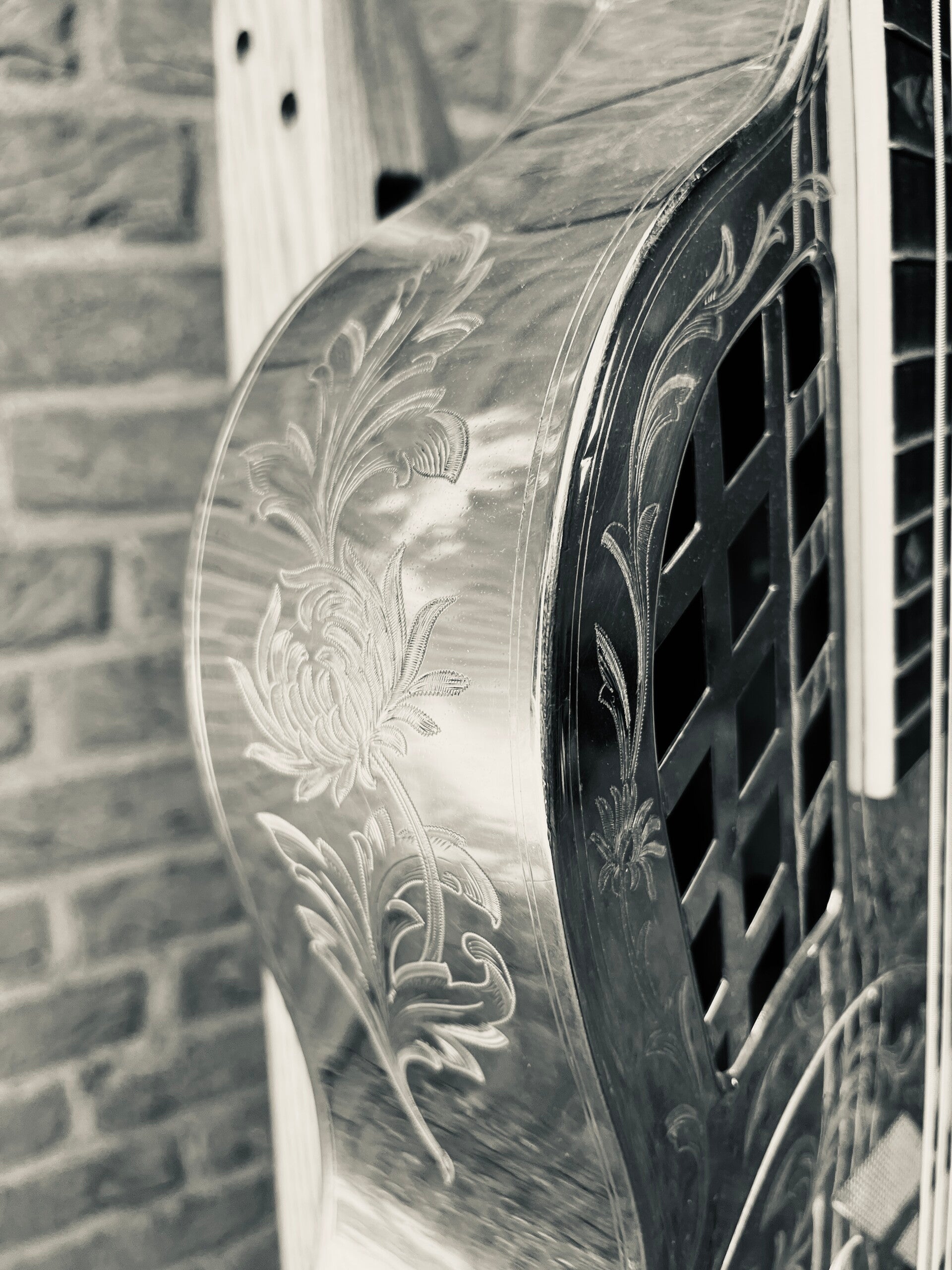
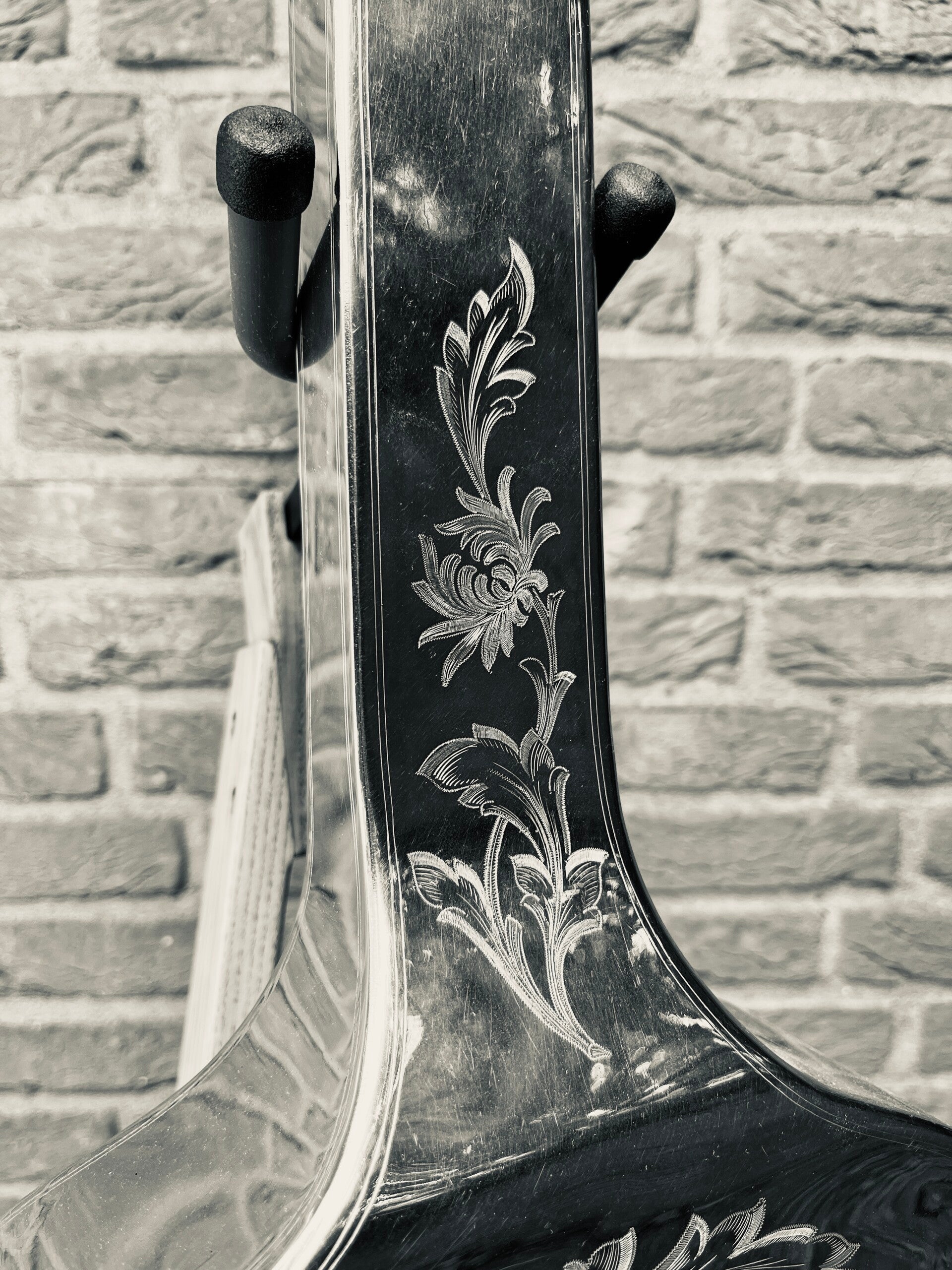
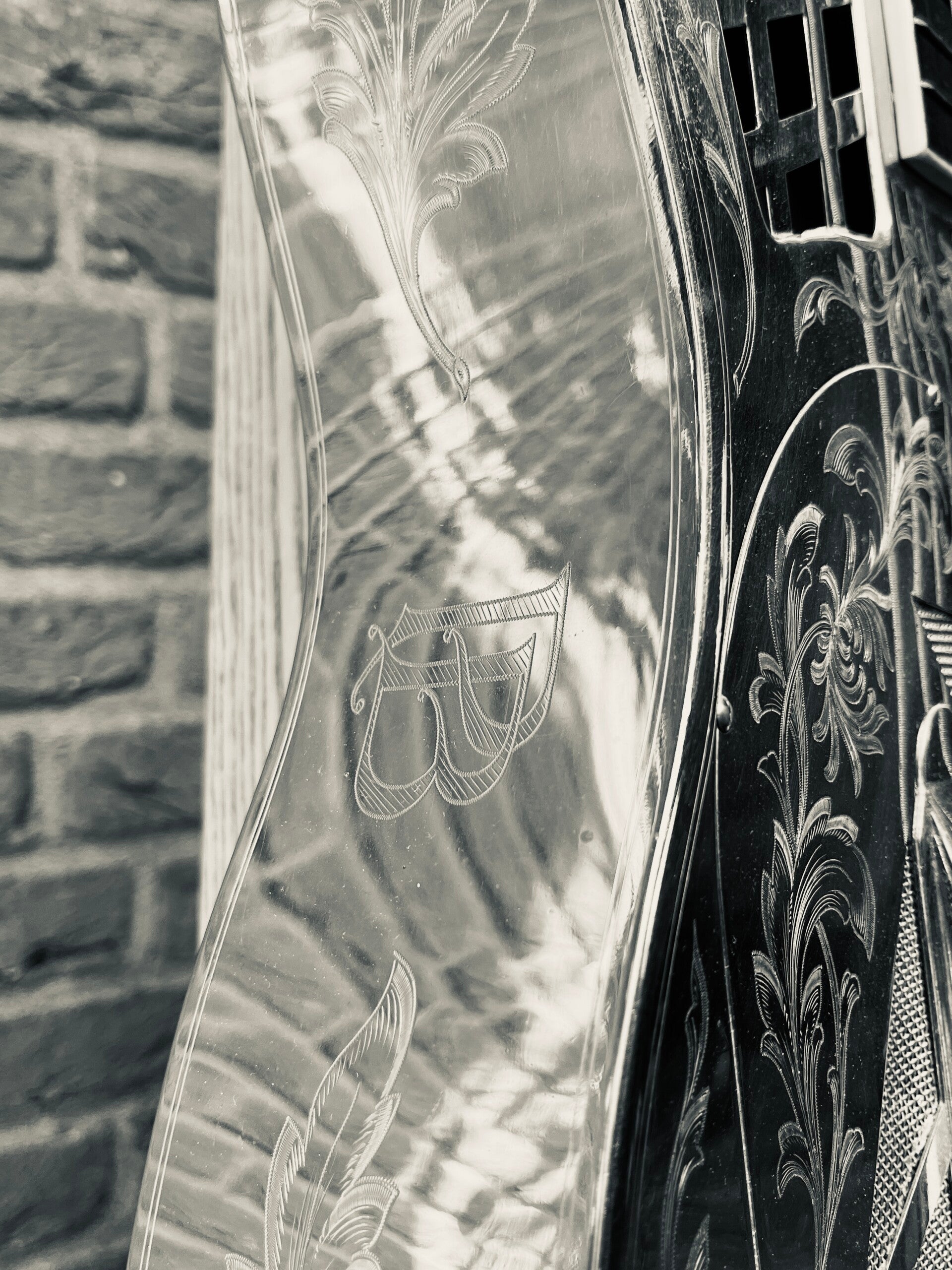
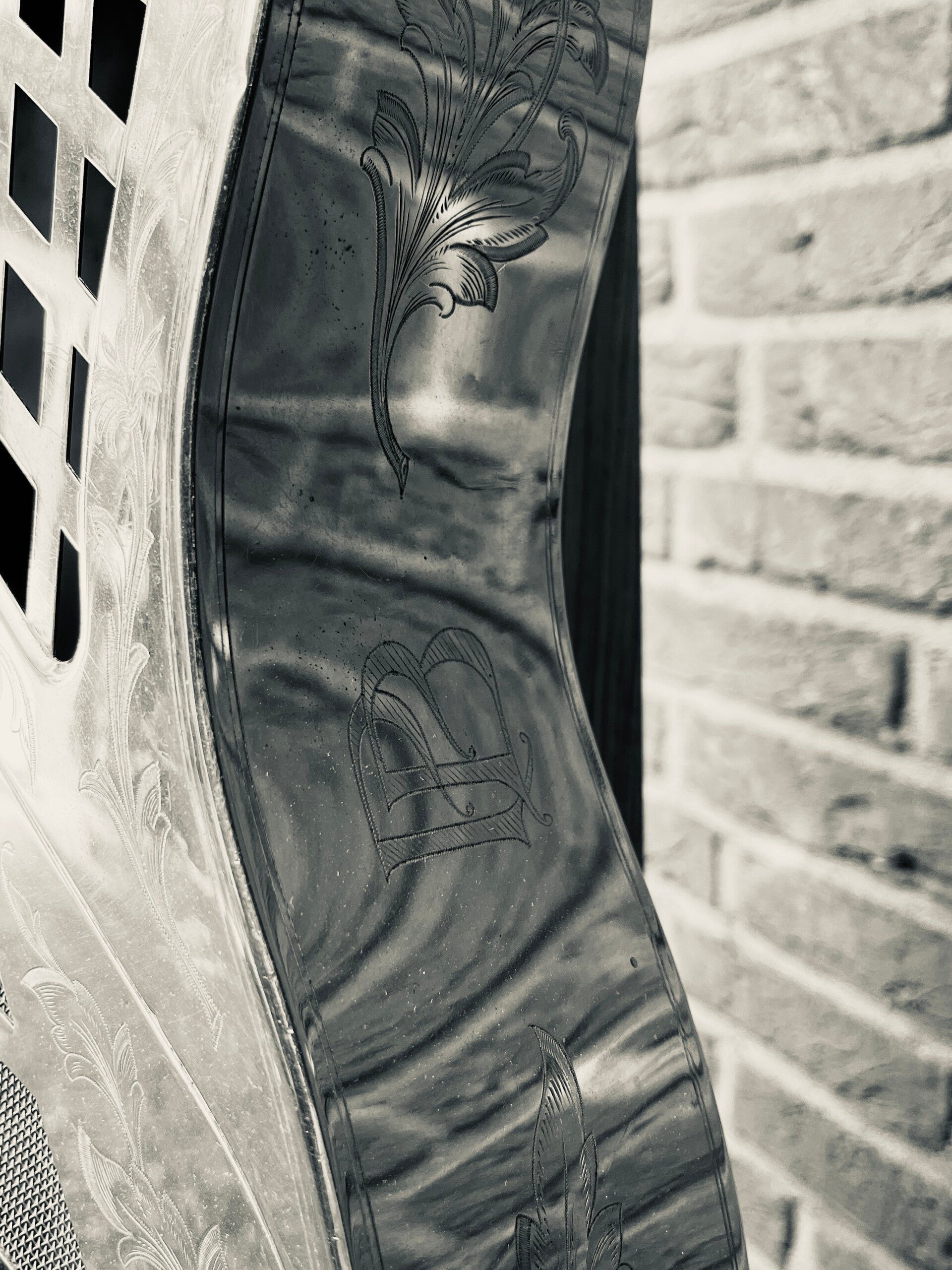
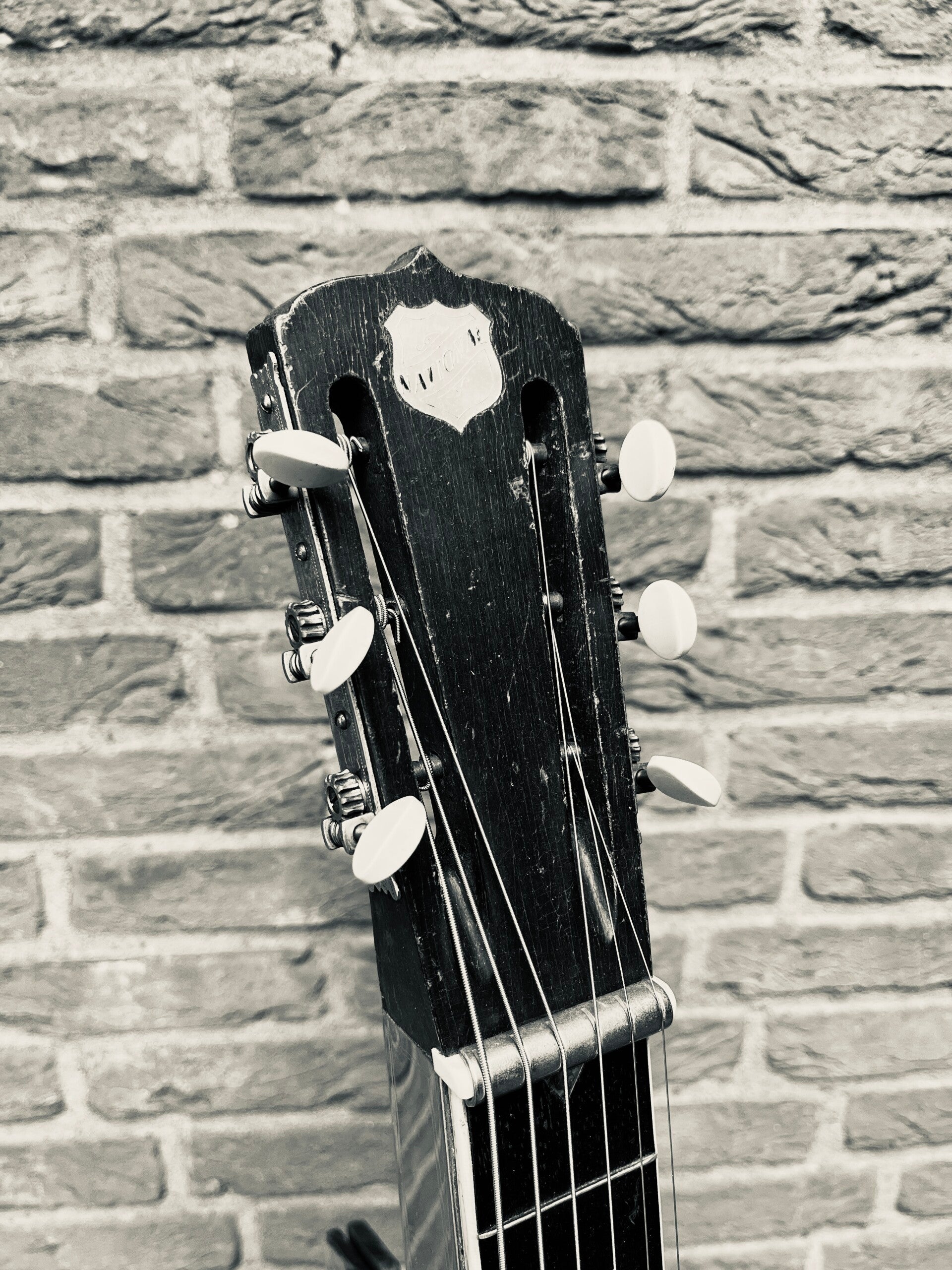
This 1928 Style 4 square neck (now in my private collection..) has the early engraving variation with the separate front engravings just like the round neck version of the Hokum blues, and master of the slide guitar “Tampa Red” had. But how about those “PB” initials on the sides?
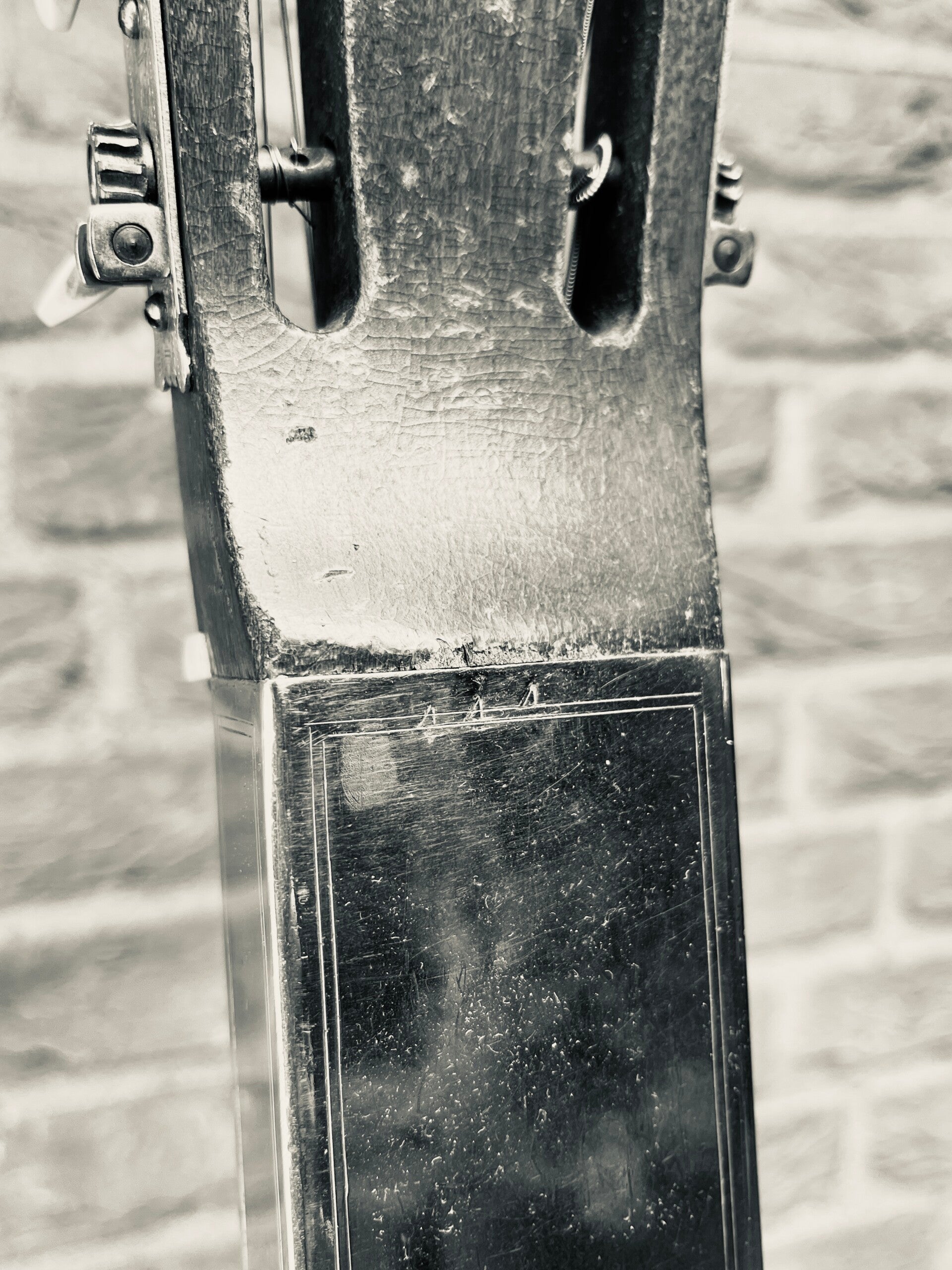
After some days (and nights) of research I found out that this particular model with the “PB” is shown in the earliest style 4 advertisements of National in 1928 (and later). With serial number 444 (they started counting at 100) of all the square neck tricones its obvious that 444 (credits to my lovely wife) wasn't just a number but a great start to introduce the Style 4 to the public. After a more simplistic but beautiful prototype tricone with the “Chrysanthemum” theme in 1927 it was ready for the full-blown official style 4 with the superb quality engravings, arched back and abalone inlays. The so called flagship of the company.

Peter Struijk and Mark Makin with the "PB" Tricone (UK 2026)
After more research I figured out that the image of this specific instrument with the PB initials was used on many artworks like the first National catalog from 1928 (Trojo), string packages, dealer catalogs and even on the original National String Instrument Corporation logo that they used on official documents like stock agreements and certificates. It was clear that already before the Style 4 was available for the public (who could afford it..) this instrument was the showpiece of the company.

Guitar String Packet

C.M.I. Catalog Advertisement

National Logo On Stock Agreement
So what about the “PB” initials? They stand of course for Paul Barth. Nephew of John Dopyera and vice president of National. The first official style 4 was owned by Paul and thats the one you see here. When I solved that puzzle I wrote National authority Mark Makin who made the magnificent book about National “Palmtrees, Señoritas and Rocket Ships”. I shared my enthusiasm and findings and the next day the phone was ringing! Fully in our element we talked about this instrument for a couple of hours and Mark underlined that this is a very important piece of the history and of the National String Instrument Corporation. He stated “You've made my day yesterday” and I felt the same way for our pleasant conversation.~
Notes and images by Mark Makin
While prototype No.146 represents the first attempt at the concept of the Style 4 pattern in its complete form, this instrument, No.444, completed a year later, created a more, ‘designed’, stylised pattern. In effect, a more commercial decoration. This was now the first, official Style 4.
On the front of No.146, there was only one Chrysanthemum flower and two ‘buds’. The front of this one now features ‘10 flowers’.
This particular guitar seems to be the earliest one to be engraved with this pattern. Because of the complexity and investment in this high quality decoration, it was intended to be a showcase instrument and consequently was photographed and used in the manufacture of printing blocks for the company’s advertising. The blocks using this instrument appeared in adverts of the time but also were used on the String packets and the Company Stocks and Shares certificates. It could be said that, pictorially, this guitar became the ‘Poster Boy’ for National.
It seems to have been an important item in the factory because it was personalised for ‘PB’ on the sides. (The ‘PB’ can be seen in the various printing blocks). It is clear that this refers to Paul Barth, John Dopyera’s nephew who, as a teenager, was spinning cones in the first factory. When John Dopyera left the company, Paul took over as Vice President. He stayed with the company until 1934. Paul probably decided to keep this guitar personally and perhaps, finally, the idea to have a Style 1,2,3 and 4 relates to discussions around this instrument.
The style of the ‘PB’ is very similar to the two year-later presentation guitar for Harry Watson, the retiring Factory Superintendent. Perhaps it was the blueprint for that one.
"This is the best story about National this year!"

About Paul Barth
Paul Martin Barth, a quiet and gentle person with a lifetime dedication to guitar making.
Barth’s fingerprints and influence are all over the iconic guitars we still know today.
So no matter that this article is more about the instrument, it is my pleasure to tell you a little about the man himself.
-
The second child (of 3) of Martin Barth and Irma Dopyera (sister of John). Born in California in 1908. His parents were both immigrants, Martin from Hungary and Irma from Czechoslovakia. They crossed the pond with the Holland America Line from The Netherlands to arrive in New York, USA.

From the 1930 National Catalog

One of Paul Barth's patents
Already at a very young age, Paul was working with his uncle John Dopyera. In John’s shop in Los Angeles he showed Paul everything about instrument building. In 1927 John founded The National Corporation together with George Beauchamp. Paul was working at National from the first day and was spinning the cones in the factory. Yes, the heart of the instrument came from Paul’s hands..
Not much later Paul (at 21 years old) made it to Vice President of the company after his uncle’s leaving. Paul and George became great friends and were spending much time together in and outside the company. Where George was the more rough and drinking kind of person, Paul was the quiet one of the two.
It’s been thought for a long time that George was the designer of the flagship Style 4 “Chrysanthemum” theme. Since the first one was Paul’s and with his background at a jewelry concern and skills of designing instruments in his later life, it now makes much more sense and it is quite possible that it was Paul (with Mr. Williams who was the engraver for the company). In matter of fact, also the invention of the first electric pickup was always credited to Beauchamp, but nowadays we have learned that it was done by George and Paul together (mostly on the kitchen table of Paul’s mother Irma).
Paul left the National company around 1934 to work with George and Adolf Rickenbacker as a major contributor to what became Rickenbacker Guitars. During that time Paul also worked with and helped people like Les Paul (who was a regular dining guest at Paul’s house), Leo Fender and many more.
In 1957 Paul left Rickenbacker and went on to Magnatone where he designed guitars in the early 60’s. During his life, Paul designed and made guitars for many companies including his own Bartell Guitars together with Ted Peckers. Paul made guitars for legends like Jimi Hendrix, George Harrison, Frank Zappa, Rory Gallagher, John Lennon and the list goes on and on..
Much unrecognized and overshadowed by Gibson and Fender in his life, but with his invention of the first electric guitar pickup together with Beauchamp it’s more than fair to call him one of the fathers of the electric guitar and a very important part of National’s history.
A man who can't be forgotten!
To learn more about Paul’s life I can recommend the book “Finding Fretless" by Paul Brett who gave me a lot of information about Barth for this article.
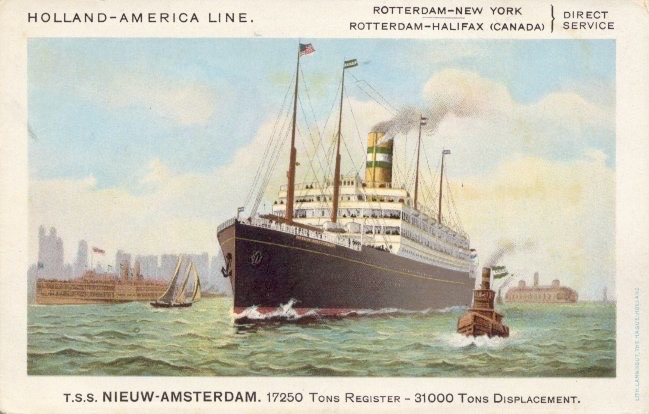
The Holland America Line

Katherine & Jozef Dopyera with their grand and great grandchildren including Paul Barth on the top right.

The five Dopyera sisters. Laura, Gabriele, Stephanie, Valeria and at the top left Paul's mother Irma.
The "PB" Style 4 Tricone